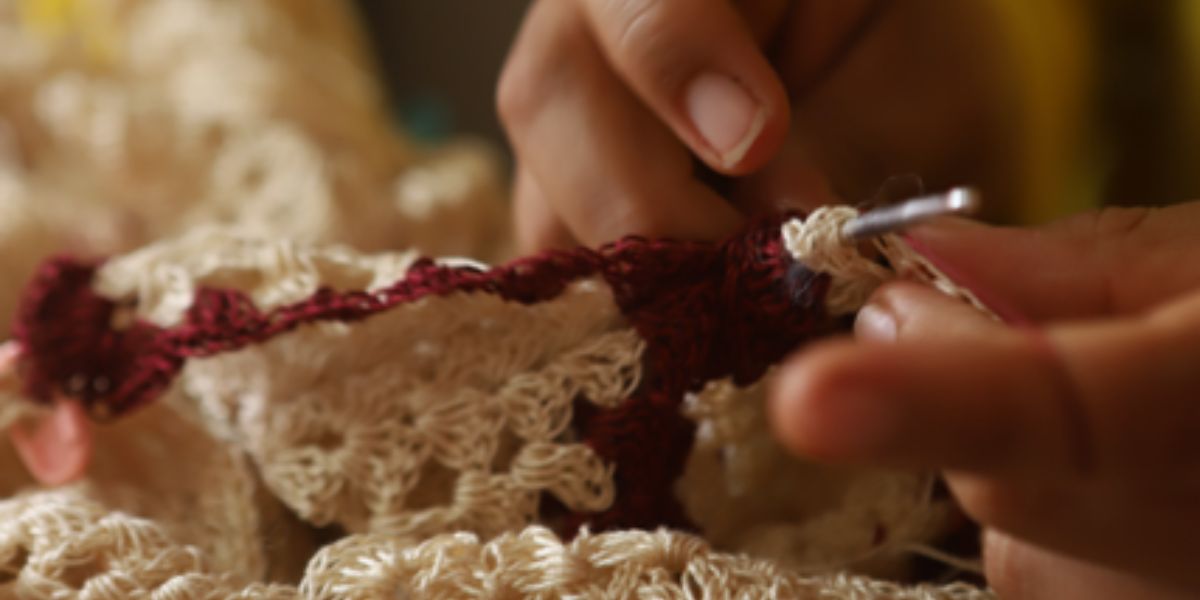
At 4,700 metres above sea level, the air in Ocongate is thin enough to make newcomers dizzy. The landscape is vast and almost otherworldly — treeless, windswept, traced by rivers that run silver with glacial melt. This is the Cusco high plain, the puna, and it has been home to weavers for as long as the Andean people have kept herds of alpaca.
Weaving at the Roof of the World
The women of Ocongate work with a raw material that could only come from this altitude. The alpaca herds that graze the puna produce a fibre of exceptional fineness — softer and warmer than the lowland variety, with a natural lustre that catches even the pale highland light. In Ocongate, the yarn is typically spun by hand using a drop spindle called a pushka, a skill taught from around age seven, the hum of the spinning a constant presence in every household.
The textiles made here — mantles, ponchos, table runners, and finely woven panels — employ the double-faced weaving technique known as pallay, where two mirror-image layers are created simultaneously on the loom. The result is a cloth that looks the same on both sides, with no visible thread ends, patterns locked into the structure of the weave rather than applied to its surface. It is technically demanding work that can take weeks for a single piece.
Every pattern is a conversation between the weaver and the mountain.
A Community Connected to the World
Until Trading Ventures established its relationship with Ocongate, most weavers sold directly into local markets at prices that barely covered the cost of materials, let alone the labour. The challenge was one of access: at 4,700 metres, hours from the nearest major road, reaching international buyers independently was effectively impossible. We act as the bridge — managing the export logistics, quality documentation, and client relationships so that the artisans can focus entirely on what they do best.
Today, pieces from Ocongate are sold to fashion brands in Europe and North America at prices that reflect their true value. The community uses the income to build better workshops, to buy higher-quality dyestuffs, and to keep their children in school — without requiring them to leave the mountains where their culture, and their craft, has always belonged.